It’s hard to calm your thoughts in today’s fast-paced world. Yet, there are easy ways to help restore calm and stop endless anxiety. Try these for some relief.

How to Calm Your Thoughts Quickly and Effectively
What should you do to calm anxious thoughts? Besides being annoying, endlessly replaying your worrisome thoughts can jeopardize your well-being. But the best solution is to be proactive. You can stop this cycle of anxiousness. These suggestions are worth exploring to help you stay calm and relaxed.

Get Physical: Go for a Walk in Nature to Restore Calm
Whenever I’m feeling anxious, I know the best thing for me is to engage in physical activity. For me, that means going for a walk outside. Besides, since I live near mountain trails, it’s an ideal way for me to be in nature and physically active. So, it’s the best of both. Here’s what happens and how a walk in nature boosts your well-being:
- Your physical activity boosts endorphins, the body’s feel-good chemicals. This elevates your mood and reduces anxious thoughts.
- In addition to the psychological benefits of walking outside, there are physical gains as well. You’re getting more oxygen, which helps your heart, circulation, and organ functions. The exercise helps tone your muscles, and you feel a good fatigue. This promotes sound sleep at night, which is also crucial for well-being.
- Besides, it’s hard to give in to anxious thoughts when there’s so much beauty around you. Use your senses to see, smell, feel, and listen to nature’s display.
Try Meditating to Calm Your Thoughts
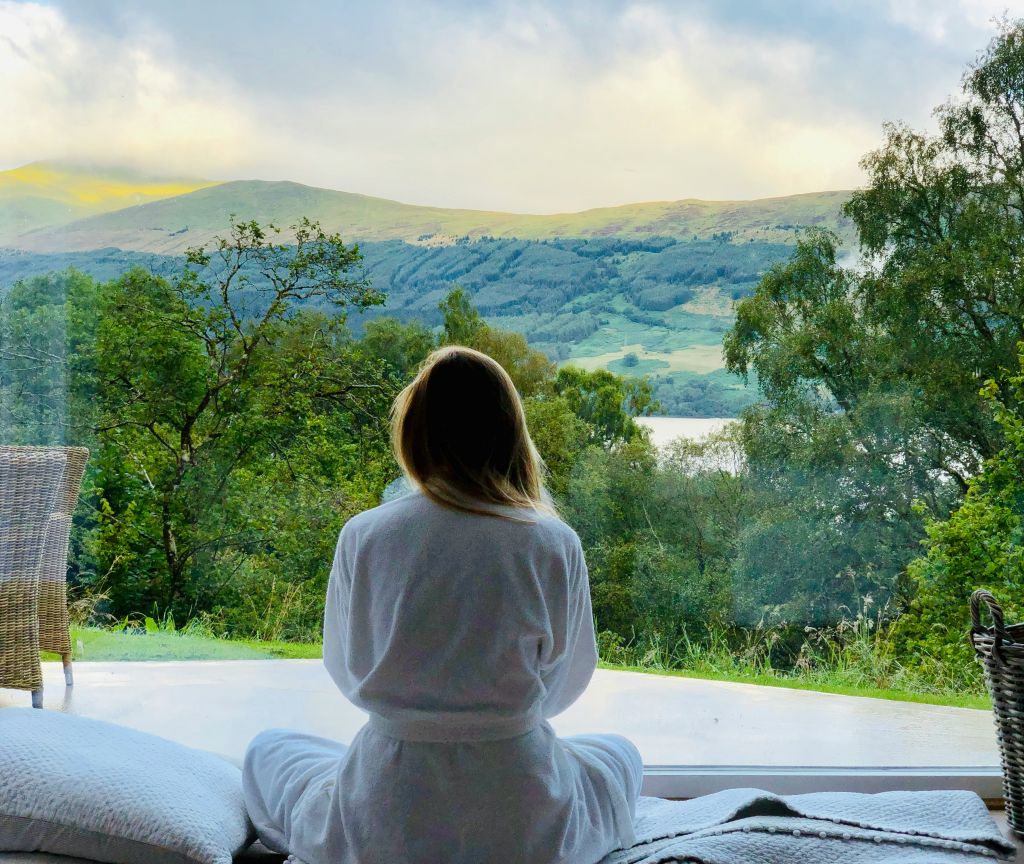
Walking outside may not be possible, but you can still calm anxious thoughts with this centuries-old practice: meditation. Besides, meditation is one of the powerful reasons for quiet time. Practitioners know the powerful benefits of meditation and are eager to encourage others to adopt these techniques. Furthermore, there are many types of meditation, so you can experiment to find one that works best for you.
What happens to anxious thoughts during meditation?
- Mindfulness helps you manage your emotions – especially anxious thoughts.
- When you meditate, you connect to the present. Being here and now, instead of dwelling in the past or worrying about the future, helps quell anxiety. Learn to be in the present and embrace life.
- Since stress heightens with anxiety, anything you can do to reduce stress also reduces anxiety. Meditating is a well-known way to lower stress.
- Additionally, meditation involves some brain retraining, which also helps you manage anxiety better.
- By meditating, you promote relaxation, necessary for controlling anxiety.
- Finally, meditation helps you shift your self-perception.
What are some examples of managing anxious emotions with mindfulness?
Mindfulness helps you in the following ways:
- You can use self-guided meditation to learn how to sense and rate your anxiety.
- Mindfulness can be used for a self-awareness body scan.
- Guided meditation also helps you detach from overthinking and let go of judgment.
- Besides, a meditation session enhances your emotional awareness.

Deep Breathing, Counting, and Other Mental Exercises
Controlling your breath is a primary way to lower stress and anxiety, and quash endless thoughts. Yet, there are many ways to use breathwork to accomplish this goal. These include deep breathing, counting, and other mentally challenging exercises.
How Deep Breathing Helps Calm Your Thoughts
Deep breathing exercises help you calm and center your body. This banishes anxious thoughts and helps break the cycle of anxiety. Furthermore, deliberate deep breathing helps you regain calm and begin having more regular breaths.
To begin, sit in a chair with your feet firmly on the floor. You can rest your hands in your lap. Be sure to relax your shoulders and arms.
Then, inhale slowly through your nose. Exhale slowly through your mouth. Repeat this deep breathing until you feel a sense of relaxation, centeredness, and calm.
Use the 5-4-3-2-1 Technique
I like to call this the top-down technique, a simple 5-step process to ground anxiety effectively.
- Look for 5 visible objects. Pay attention to the details of these objects so you can imprint them in your mind. Look at the veins in a leaf, or the silky shine of a cat’s fur in the sun.
- Next, locate and possibly touch 4 objects near you. You want those with tactile feel, like a rough throw pillow, a hot coffee mug, the fineness of your child’s hair.
- Now, identify 3 things you hear. This could be a ticking clock, the radio from another room, or the sounds of freeway traffic through the window. Sit and listen without judgment. The point is to acknowledge the sounds, even the silence between sounds.
- Smell 2 things. Is there dinner cooking in the oven? Are there fresh flowers in a vase? What about the scent of lotion on your skin?
- Finally, think about 1 thing you want to taste. Is it the tangy salad dressing on your salad? What about the delicious latte you can’t wait to drink?
The essence of this method is bringing you back to the present. It effectively grounds your anxious energy and calms it. Anxiety and worry make you dissociate from your body, whereas grounding techniques help root your body and reconnect your senses.

Backward Counting and More
I don’t know about you, but I’m not particularly good at counting backward and or reciting the alphabet backward, for that matter. Nevertheless, many behavioral experts say these types of exercises work well for calming anxious thoughts.
Start at 100 and count backward by the number you choose, such as 7 or 9. This is a mental challenge that forces you to focus on what you’re doing. There’s no time or room for anxious thoughts.
Other mental challenges for calming anxious thinking include reading backward, naming items in categories, and speaking aloud the steps in how to do something in detail.
Engage in Tai Chi to Calm Your Thoughts
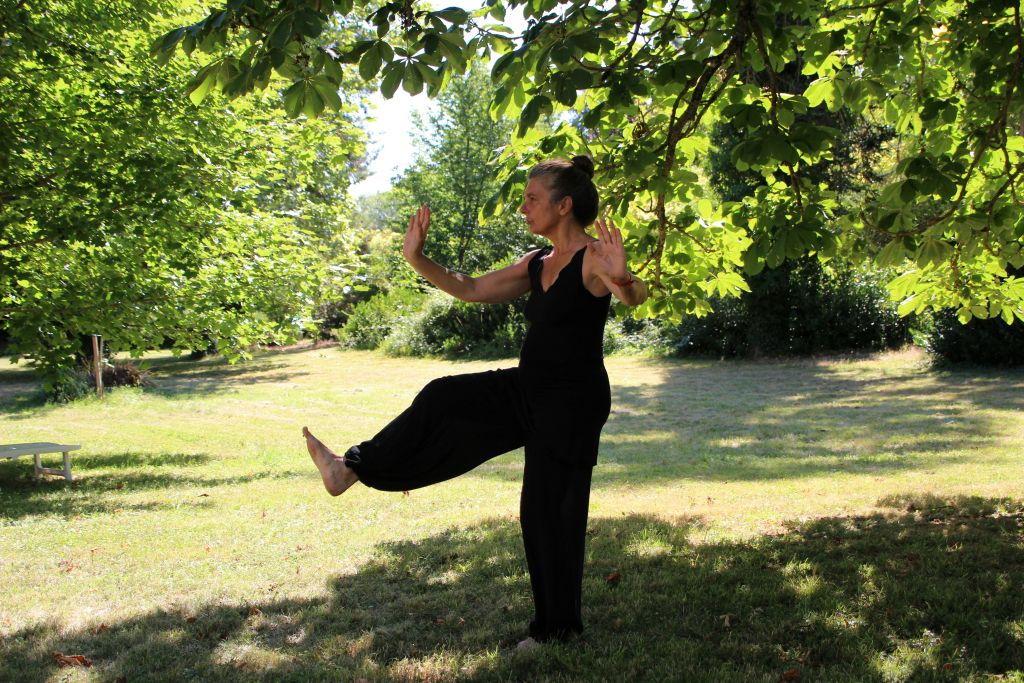
The ancient practice of Tai Chi is excellent for relieving anxiety, psychological distress, and depression. There are essentially two elements of Tai Chi that help calm the mind and body: breathing and postures.
According to research, it’s the balanced connection between these two that enhances mood. You can see how this works by holding your breath. Feel your body tense and your mind race. Now, with tai chi’s controlled breathing and postures (or poses), your sense of calmness and relaxation takes over. Tai chi also helps keep your brain sharp.
Want more information on the benefits of tai chi? Check out the National Center for Complementary and Integrative Health.
Anyone Can Do These
The best part about these four simple ways to calm your thoughts is that anyone can do them. Besides, having them readily accessible and knowing you can use them when you want helps you feel prepared to handle anxious thoughts when they arise. This adds to your confidence and ability to cope with worrisome anxiety.